
Artificial Intelligence: A New Form of Consciousness?
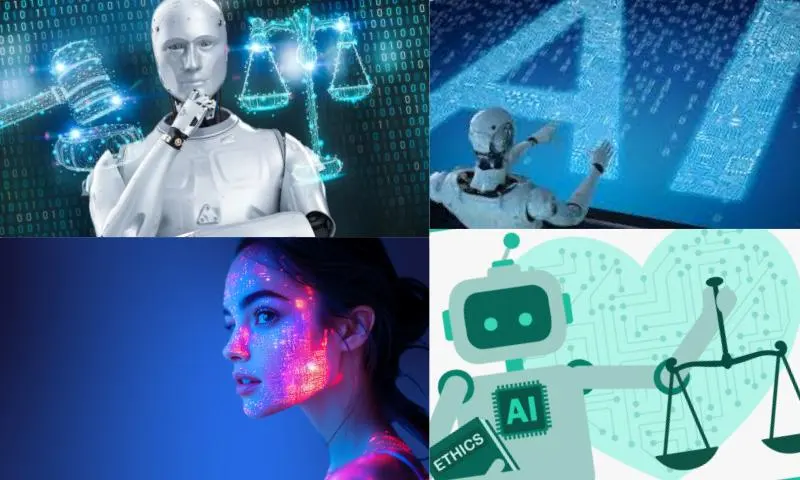
Artificial intelligence is not just a technological innovation today but also an evolutionary turning point for humanity. Machines are no longer just tools that execute commands given by humans; they are becoming beings that can make their own decisions and learn. So, what does this mean? When a machine starts to think like a human, can we imbue it with a human-like consciousness? Today, with the advancement of artificial intelligence, the expansion of machines' capacity to process information, think, and learn on their own, this question is constantly being brought to the forefront. Whether artificial intelligences will have emotions, consciousness, or a purpose in the future will be a major question for humanity to solve. To obtain information on this subject and to ask your questions, you can look at relevant online companies on web pages and examine them in detail from here.
Artificial Intelligence and Ethics: Who Is in Control?
Artificial intelligence also brings serious questions, especially in terms of ethics. For example, who will be responsible when autonomous vehicles are involved in an accident? Will the decisions made by an artificial intelligence be shaped by the values of the people who programmed it, or entirely by the machine's learning process? These questions show that artificial intelligence has become an important issue not only in science fiction movies but also in the real world. The ethical dimensions of artificial intelligence create an area of responsibility for both technology giants and governments. As humanity, we must discuss how to develop a system to control and oversee the decisions and actions of artificial intelligence.
The Future of Business: Artificial Intelligence and Human Interaction
Today, artificial intelligence has begun to revolutionize many industries. In areas such as advanced automation, data analysis, healthcare, finance, and education, machines can produce much faster and more accurate results than humans. So, how will this situation affect the human workforce? In the future, the relationship between artificial intelligence and the workforce makes us think about how humans can increase their productivity and what new job fields it can create. However, on the other hand, machines taking over our jobs may also lead to the disappearance of some professions. The most critical question here is how humans can work more efficiently with artificial intelligence and how they can adapt to this new era. Can artificial intelligence be a tool that complements human capacity, rather than a threat?